


Laudate
4.76.13K Reviews
App Specs
- Version
- 2.91
- Updated On
- License
- Free
- Downloads
- 1,000,000+
- Developer
- Aycka Soft
- Categories
- Books & Reference
- Platform
- Android, iOS
Screenshots
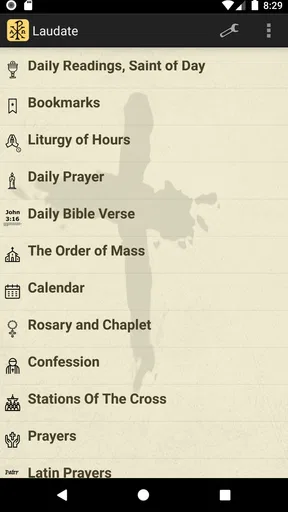
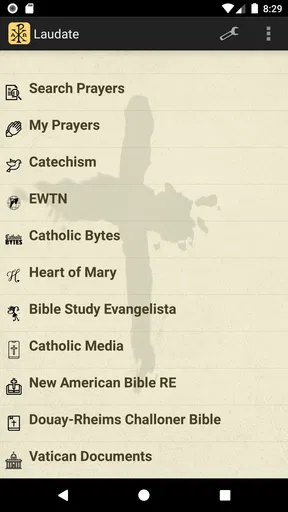
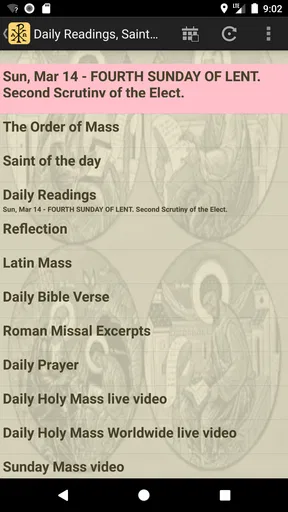
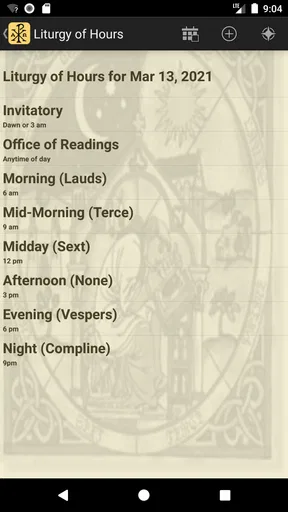

 Analysis by AppCompare
I approached Laudate as a practical Catholic reference app rather than as something to open once and forget. It brings daily readings, prayers, rosaries, and podcasts into one place, which makes it especially useful when I want a quiet, structured moment without switching between several apps or searching the web. The experience is broad, but its real value depends on whether you prefer an all-in-one religious library or a simpler tool focused on one task.
It is a free app in the Books & Reference category, developed by Aycka Soft, and it is suitable for Everyone. Its long presence on mobile devices is reflected in its release history, while the current version is 2.91 and requires Android 6.0 or later. With more than a million installs, a 4.7 average from roughly thirty-one thousand ratings, and about six thousand reviews, it has clearly attracted a substantial audience. Those figures do not replace personal judgment, but they do make Laudate feel like an established choice rather than an obscure download.
How Laudate feels in everyday use
I find Laudate most useful when I decide what I want from a visit before opening it: a reading, a prayer, a rosary, or something to listen to. That simple habit keeps its range from turning into browsing for browsing’s sake, and it gives the app a steady place in an ordinary day. From there, I’d look at a few personal settings and routines that can make using a broad reference app feel more focused.
A broad Catholic reference shelf in your pocket
The first thing I noticed is that Laudate is organized around repeated spiritual habits. Daily readings are useful when I want to begin the morning with a familiar rhythm, while the prayer and rosary sections work better when I need something more specific. Podcasts add a listening option for times when reading is inconvenient. That combination gives the app a different character from a single-purpose Bible reader, prayer timer, or audio player.
I can imagine using it in several ordinary situations. Before leaving home, I might open the daily reading instead of browsing news. During a commute, the podcast section can make the app more suitable than a text-only reference. In the evening, I can move to a rosary or prayer without having to remember the exact name of another application. The benefit is not that every section is equally important to every person; it is that the app reduces the friction between deciding to pray and finding material to use.
That breadth also creates the main organizational challenge. A newcomer who only wants the day’s reading may find the wider collection more extensive than necessary. Someone looking for a single prayer can be faced with several possible paths through the app. I found that Laudate rewards a little exploration at the beginning. Once I know where my preferred sections are, the experience becomes much more direct.
Daily readings are strongest when consistency matters
The daily-reading approach is a good fit for people who want a dependable starting point rather than an open-ended library. Instead of deciding what to read every time, I can use the current day as a natural prompt. That small reduction in choice matters: it turns the app into a routine tool, not merely a warehouse of religious text.
Worth Reading Before You Choose

EA SPORTS FC Mobile 26 Is a Bigger Football Game, but It Takes Time

Flipboard Shows What News Apps Must Do Beyond the Feed

Switching to Android Auto Means Rethinking Your Driving Routine

Google Calendar Makes a Crowded Week Easier to Manage

Ludo King Makes the Most of the Minutes Between Plans

Baby Panda World Brings Quick Play to Modern Phones, but Its Game Library Feels Busy
There is also a useful distinction between reading for reflection and reading for research. Laudate works well when I want to pause, read, and continue with prayer. It is less suited to someone who expects the detailed cross-referencing, scholarly notes, or extensive study tools of a dedicated Bible application. I would choose it for daily practice, but I would not treat it as a replacement for every kind of Catholic study resource.
A practical tip is to decide in advance how the app fits into your day. If I open it without a purpose, the number of sections can encourage browsing. If I choose one action—read the daily passage, pray a rosary, or listen to a podcast—the app feels calmer and more useful. This is a small workflow change, but it makes the difference between a quick devotional visit and aimless tapping.
Prayer and rosary tools for different levels of guidance
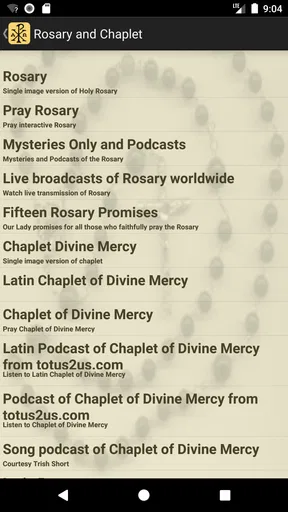
The prayer collection is valuable for moments when I know I want to pray but do not want to compose the words myself. It can serve someone returning to familiar Catholic prayers as well as someone still learning them. The rosary material adds a more guided structure, which is helpful when I want to keep my attention on the sequence rather than repeatedly checking another source.
At the same time, an app cannot reproduce every part of a personal prayer practice. Some people will prefer a printed prayer book because it feels less distracting and does not place a phone at the center of the moment. Others may want richer audio guidance, adjustable pacing, or a highly specialized devotional tool. Laudate makes the material accessible, but the phone itself remains part of the experience, and that can be either convenient or unwanted depending on the setting.
One non-obvious advantage is the ability to use the same app for different kinds of commitment. A short prayer can fit into a busy break, while a rosary can support a longer period of attention. I would not assume that every user needs to explore the entire collection. The better approach is to identify one prayer format that feels sustainable, then return to it regularly before adding more.
Podcasts change how the app fits into a busy day
The podcast section broadens Laudate beyond silent reading. I find that important because religious apps often work best at home, while audio can travel with me. Listening may suit a walk, a drive, or household tasks when holding a phone and reading are impractical. It gives the app a more flexible role without requiring me to treat every visit as a formal study session.
Audio also introduces a trade-off. Reading lets me move at my own pace and stop immediately at a sentence that deserves reflection. Listening is more passive, and it can be harder to revisit a particular point unless the controls make that easy. For that reason, I would use podcasts for accompaniment and inspiration, while choosing the written sections when I want close attention.
People who already organize all their listening through a general podcast service may prefer staying there, especially if they need sophisticated subscriptions, playlists, or playback management. Laudate is more appealing when I want religious content gathered beside readings and prayers, rather than scattered across unrelated media tools.
Trust should begin with visible choices, not assumptions
Because Laudate deals with personal religious use, I think trust deserves more attention than it might receive in an ordinary reference app. A person may use it during private prayer, in a family setting, or while exploring faith at a sensitive point in life. I therefore judge it by what the app visibly lets me control and by whether I can use its core material without feeling pushed into unnecessary decisions.
The app’s free price lowers the barrier to trying it, but free does not automatically explain every data practice or permission choice. I would still review the permission prompts and the privacy information shown on my device before granting access. I would not infer that an app is private simply because its content is religious, and I would not infer the opposite without evidence either. The responsible approach is to inspect the choices presented during installation and use.
That caution is especially relevant if the phone is shared with family members. Reading history, saved preferences, notifications, or other visible traces can reveal that someone is using a religious app even when the person has not intended to discuss it. I recommend checking notification wording and the device’s lock settings if discretion matters. This is a general phone habit, but it is particularly sensible for a personal faith resource.
Permissions, accounts, and control points to check
Before settling into Laudate, I would pay attention to every permission request rather than approving everything automatically. A reference app should be judged by whether a requested permission makes sense for the action I am trying to perform. If a feature needs access to something on the device, I want the reason to be understandable at the moment the request appears. If I am not using that feature, I prefer to postpone the decision where the operating system allows it.
I also look for account-related choices in the app and in the operating system. If an account is optional for a particular activity, I would rather use the app without creating one. If an account is needed for a feature I care about, I want to know what information is requested and whether I can later change or remove that account through a clear path. I cannot responsibly promise a specific account flow without seeing the exact screen on a particular device, so my advice is to read each prompt instead of treating registration as automatic.
The same principle applies to notifications. Daily reminders can support a habit, but they can also become noise or expose private interests on a lock screen. I would start with notifications disabled or limited, then enable only the reminders that genuinely help. This gives me more control than accepting every alert and trying to undo the clutter later.
Another useful habit is to revisit permissions after installation. Mobile operating systems change, and an app may offer several sections that do not all require the same access. Checking the permission page lets me keep the app’s access aligned with how I actually use it. If I only read text and never use a feature that depends on a particular permission, I would question whether that access is necessary for my routine.
Data-sensitive moments deserve a little care
Laudate’s content can feel personal even when I am not entering a journal or writing private notes. The very act of opening a prayer, reading a passage, or listening to a religious podcast may reveal something about my interests to another person using the same device. That is why I would avoid leaving the app open on a shared screen and would review recent-app previews if privacy is important.
Network use is another practical consideration. Audio and other content-heavy sections may be less convenient when connectivity is limited, while written prayers are generally the kind of material I would want available with minimal fuss. I would test my most-used sections before relying on the app during travel or in a place with unreliable service. If a passage or audio item is essential to a planned routine, I would confirm how it behaves before leaving home rather than discovering the limitation at the moment I need it.
Battery and attention are also part of the privacy conversation. Listening for a long period keeps the phone active and may encourage me to remain in the app longer than intended. A simple way to reduce that dependence is to choose a defined listening period, then close the app when the session ends. This is not a criticism of the content; it is a reminder that convenience should remain under the user’s control.
Families should also think about age and device context. The Everyone rating makes Laudate broadly suitable from a content-classification perspective, but parents may still want to show younger users how to navigate the app and how to protect personal device information. An age label is not a substitute for guidance about notifications, accounts, or sharing a phone.
Where it beats the usual alternatives
Compared with a general Bible app, Laudate feels more distinctly Catholic because its purpose extends beyond scripture reading into prayers, rosaries, and podcasts. A Bible-first app may be better for translation comparison, highlighting, note-taking, or systematic study. I would choose Laudate when I want a wider devotional toolkit, and a dedicated Bible app when close textual research is the main goal.
Compared with a printed prayer book, Laudate wins on portability and variety. I can carry readings, prayers, rosaries, and audio in one device instead of bringing several books. The printed option still has a meaningful advantage: it is quieter, more tactile, and less exposed to notifications or unrelated distractions. For a retreat, a bedside routine, or anyone trying to reduce screen time, paper may be the better companion.
Compared with a general podcast application, Laudate is more focused. Its value comes from keeping listening alongside Catholic reference material. A mainstream podcast tool may offer stronger discovery and playback organization, but it also separates audio from the prayers and readings I may want to use before or afterward. The choice depends on whether concentration or media-management depth matters more.
Compared with a simple prayer app, Laudate offers more range but less minimalism. Someone who wants one daily prayer and nothing else may find a smaller app easier to understand. Someone who expects to move between a daily reading, a rosary, and audio content will probably appreciate not having to maintain several separate tools.
Who should use it, and who may want something else
I would recommend Laudate to Catholics who want one free starting point for daily readings, prayer material, rosaries, and podcasts. It is also a sensible choice for someone building a routine gradually, because the app supports short visits as well as longer devotional sessions. Its broad collection is particularly useful when my needs change from day to day.
I would be more cautious about recommending it to someone who dislikes browsing, wants a completely distraction-free paper experience, or needs advanced academic Bible-study functions. Users with strict privacy requirements should inspect permissions, notifications, account prompts, and visible device behavior before making it part of a sensitive routine. That is not a reason to reject the app automatically; it is a reason to make the decision deliberately.
People using older phones should also check compatibility before planning around it, since the minimum operating-system requirement is Android 6.0. The current version, 2.91, indicates that the app continues to have a defined software release, but an update number alone does not tell me how every device will behave. I would install it, test the sections I actually need, and keep the app only if navigation and playback feel reliable on my phone.
My cautious verdict after using the full range
The strongest reason to choose Laudate is its combination of Catholic reference material and everyday flexibility. I can move from a daily reading to a prayer, a rosary, or a podcast without changing apps, and that makes a regular practice easier to maintain. The free price and Everyone rating make it approachable, while its large user base suggests that it has become a familiar option for many people.
My reservations are mostly about fit and control rather than the idea behind the app. The wide selection can feel busy if I only want one action. A phone can interrupt a moment that would feel more peaceful with paper. And because religious use can be personal, I would not skip the ordinary checks around permissions, notifications, accounts, and shared-device visibility.
After adjusting my expectations, I see Laudate as a practical companion rather than a complete answer for every Catholic reading or prayer need. I would install it for a portable, varied devotional library, then narrow my routine to the sections that genuinely help. If I wanted deep textual study, absolute screen-free focus, or highly specialized playback controls, I would pair it with a more focused alternative. For someone who wants several Catholic resources gathered in one accessible app, however, Laudate is a thoughtful and useful choice—as long as the user remains in charge of what the app can access and how prominently it appears in daily life.
Pros
- Large collection of Catholic prayers
- Bible readings
- and devotional content.
- Includes daily readings and saint information for regular faith practice.
- Offers multiple language options for a wider range of users.
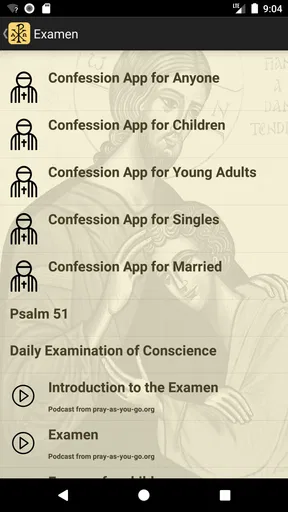
- Useful examination of conscience and confession preparation resources.
- Many features are available offline after content is downloaded.
Cons
- Content is focused specifically on Catholic beliefs and practices.
- The large amount of material can make navigation feel overwhelming.
- Some sections may appear dated compared with newer religious apps.
- Audio and media features can require additional downloads or storage.
- Ads or donation prompts may interrupt parts of the free experience.
FAQs for Laudate
What is Laudate, and what can I use it for?
Laudate is a Catholic prayer and faith app that brings together daily prayers, Bible readings, the Rosary, novenas, saint information, liturgical resources, and other devotional material. After reviewing the app, its main strength is convenience: it places many commonly used Catholic resources in one mobile library, making it useful for personal prayer, Mass preparation, Scripture reading, and learning more about Catholic traditions.
Does Laudate require an internet connection?
Laudate can be used for many activities without a continuous internet connection, especially when content has already been downloaded or included in the app. However, some features, updates, audio resources, links, and daily content may require internet access. Availability can also vary by device and version, so users who plan to pray while traveling should open important sections in advance and confirm that the material they need is accessible offline.
Is Laudate free to download and use?
Laudate is generally available as a free download, allowing users to access a substantial collection of Catholic prayers and resources without paying a subscription. Depending on the platform and current app version, optional features, donations, advertising, or external links may be present. Before downloading, check the Google Play Store or Apple App Store listing for the latest pricing, permissions, and in-app purchase information.
What Catholic content and languages are available in Laudate?
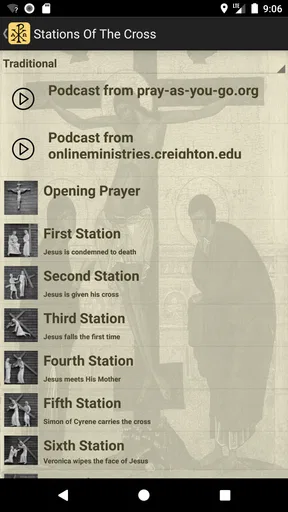
The app includes a broad selection of Catholic content, such as daily readings, prayers, the Rosary, Stations of the Cross, novenas, examination of conscience material, saint information, and liturgical references. Laudate has also been designed for an international audience and may provide several languages or multilingual resources. The exact selection can differ by device, app version, and content section, so users should verify language support before relying on it for regular prayer.
Is Laudate suitable for beginners, and can it replace a parish or priest?
Laudate is suitable for both Catholics who already have an established prayer routine and beginners looking for guidance. Its organized menus and explanations make it easier to discover traditional prayers and devotional practices. Nevertheless, it should be viewed as a supplementary resource rather than a replacement for parish life, sacramental participation, or personal guidance from a priest. Some devotional material may also benefit from appropriate pastoral context.


